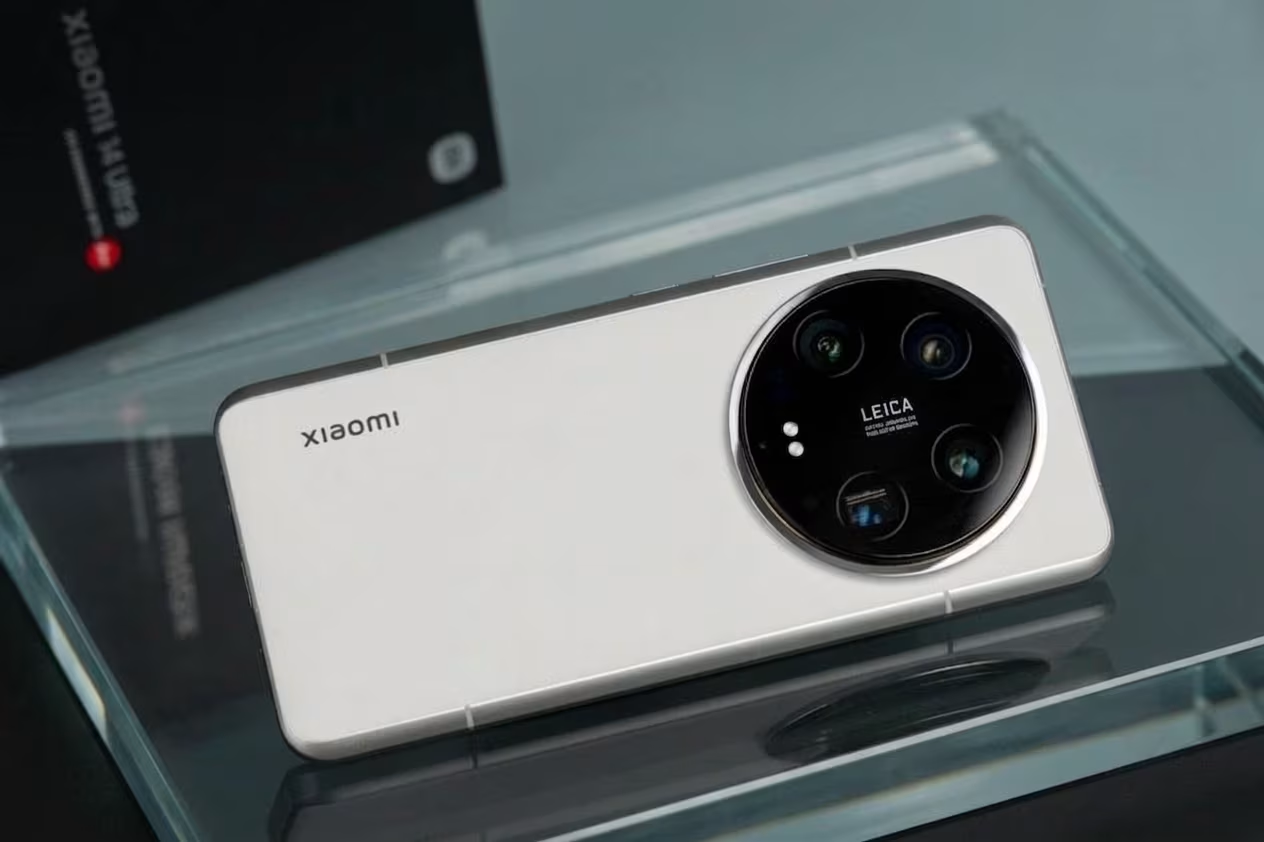
Xiaomi 18 Fold Review: Big Battery, Bigger Multitasking, Rough Edges
Xiaomi's latest foldable leans hard into raw hardware and software freedom, delivering a phone that outlasts and out-multitasks nearly everything else in the…
Read discussion
Xiaomi's newest foldable doesn't hide what it's aiming at. It matches the iPhone Duo's shape almost exactly, then beats it on nearly every spec sheet number,…
Xiaomi's newest foldable doesn't hide what it's aiming at. It matches the iPhone Duo's shape almost exactly, then beats it on nearly every spec sheet number, while falling short on the software polish that made Apple's phone feel finished.
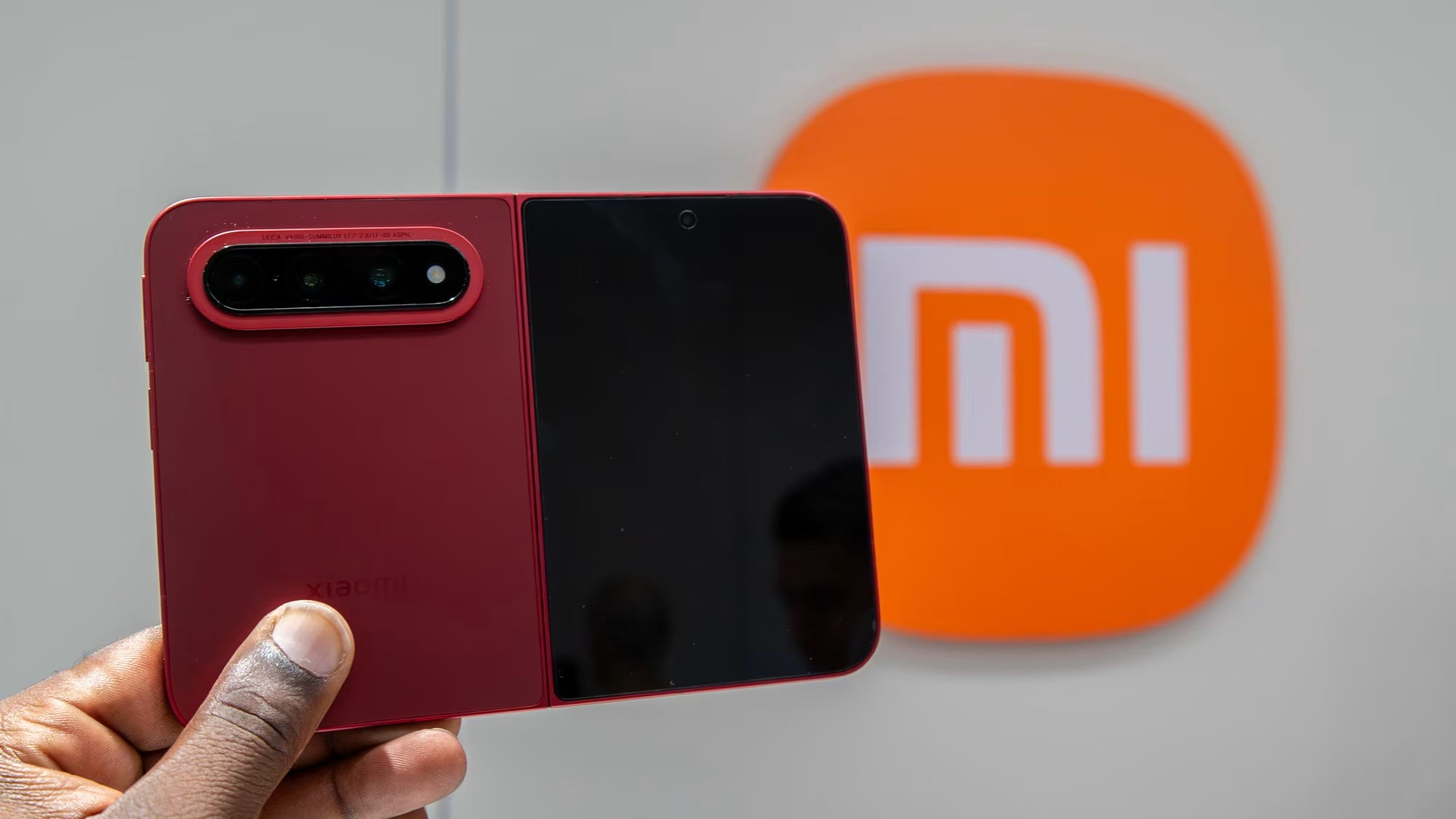
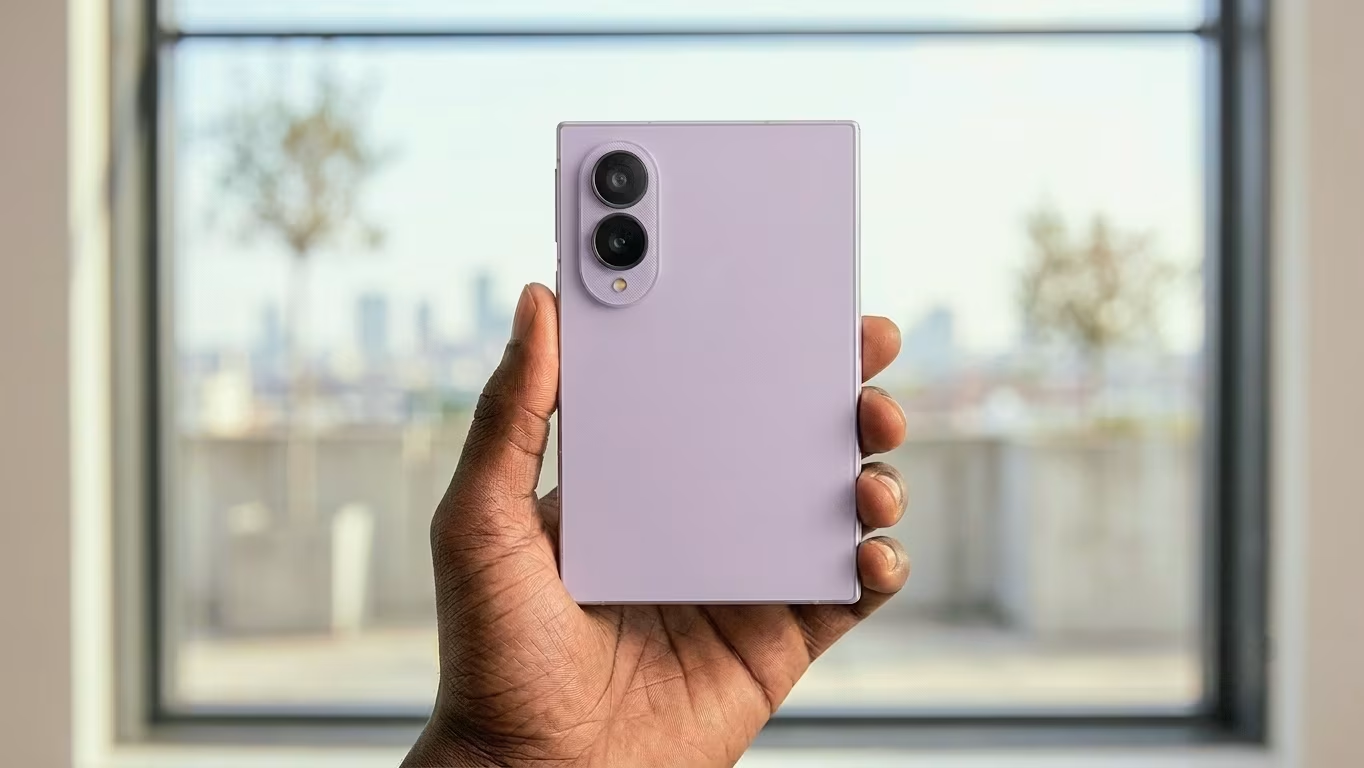
The Xiaomi 18 Fold is the same height as the iPhone Duo to the tenth of a millimeter, with a matching 5.4-inch cover display that opens into a 7.6-inch inner screen, the same 1.4:1 aspect ratio Apple uses. Same flat edge on one side, same large-radius corners on the other. The crease is nearly gone here too, roughly 98% erased in normal use. This was clearly built to sit next to Apple's phone and invite the comparison.
The Fold is thinner at 5.02mm open against the Duo's 5.2mm, and lighter at 219g against Apple's 254g, making it one of the lightest foldables of the year while the Duo is one of the heaviest. It packs a 6,000mAh silicon carbon battery, more capacity than any iPhone, Galaxy or Pixel, folding or not, and it lasted the longest of any foldable tested. Charging is faster too, at 67W against Apple's effective 60W, and the display gets brighter, at 4,000 nits against the Duo's 3,000. The camera array adds a third lens missing from Apple's setup, a 3.5x optical telephoto, alongside a 200MP main and 50MP ultrawide. It also keeps dual SIM slots, an IR blaster, a pre-installed screen protector, and it starts at roughly $1,640, well under the Duo's $1,999.
Where Xiaomi separates itself most is software freedom. The 18 Fold can run six apps at once as a swipeable group, plus two additional floating windows on top, all functioning simultaneously without the system stepping in to limit it. Windows resize by dragging, a four-finger swipe shows everything running at once, and apps can be pulled open to full tablet size while keeping the ability to snap back into split view. It's a level of unrestricted multitasking well beyond the two-app split view Apple introduced with the Duo.
The software doesn't consistently take advantage of its own screen. Empty margins sit unused around some apps, the built-in camera app displays uneven black bars, and the weather app's numbers look stretched and low-resolution when the phone is opened. Third-party apps fare worse: YouTube distorts under split screen, Netflix's interface breaks on rotation, and one game's menu button lands directly under the selfie camera. Face unlock also isn't as secure as Face ID, though it's less of a hassle day to day than resorting to the Duo's Touch ID.
Build quality raises its own concerns. The aluminum frame explains the weight advantage but trades away some durability and scratch resistance compared to Apple's titanium. The phone also struggled under sustained load, overheating and force-closing a stress test twice within about 10 minutes, with a thermal camera confirming heat concentrated heavily on one side near the chip rather than spreading evenly. The ultrawide camera shows visible grain even in well-lit video, and despite the 200MP main sensor's headline number, its physical sensor size matches a base iPhone 17, a much less impressive comparison once you look past the megapixel count.
Smaller refinements are missing too. There's no stylus support on either screen, the hinge sounds noticeably scratchier than a Galaxy Z Fold8's, there's no nano-texture coating to fight fingerprints or glare, and the crease, while similar in depth to Apple's, is slightly more visible without an equivalent disguising layer. The speakers run harsh enough that they're worth turning down.
What works
What doesn't
 iPhone Duo, more polished software, heavier, pricier.
 Samsung Galaxy Z Fold8, a more refined hinge and build for similar money.
Xiaomi's latest foldable leans hard into raw hardware and software freedom, delivering a phone that outlasts and out-multitasks nearly everything else in the…
Apple's foldable was supposed to shake up Samsung's home turf. Instead, it seems to have helped Samsung sell more phones. The numbers Samsung Galaxy Z Fold8…
Yes, and it is a real one. Here is what the f/1.63 to f/4.0 aperture actually does, when to change it, and why Xiaomi dropped it on the 15 Ultra. At a glance…
The most capable zoom camera on any phone, in a package that is genuinely hard to buy in the West. Our score: 8.5 / 10 At a glance Spec Detail Main camera 50MP…
A genuine f/1.63-to-f/4.0 aperture on the main lens, plus a quad-Leica system, a camera phone for people who think in stops. Our score: 8.5 / 10 A mechanical…
We asked for better cameras. We did not ask for phones that rock on a table like a see-saw. Look at what we are carrying The iPhone 17 Pro has a plateau…