UN Adopts New World Map That Fixes Africa's Size
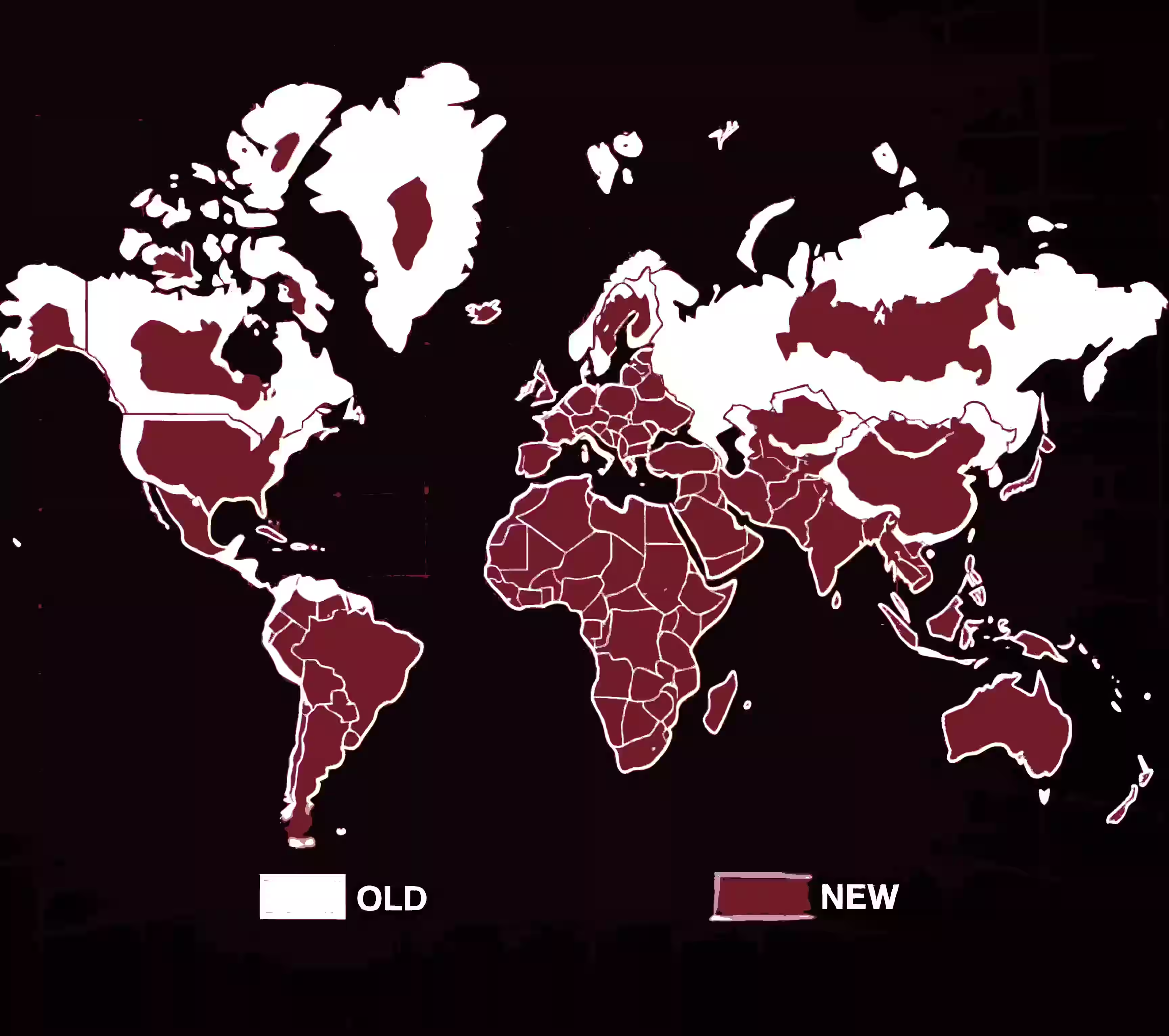
A 450 year old cartographic distortion just lost a UN vote, 164 to 1. Vote result: 164 in favor · 1 against · 6 abstained At a glance Detail Fact Resolution "Correct the Map" Sponsor Togo, on behalf of the African Group New projection Equal Earth Old standard Mercator (16th century) Against United States Abstained Serbia, Estonia, Georgia, Lithuania, Moldova, Ukraine The problem it fixes The resolution addresses a colonial era distortion that has visually shrunk Africa for 450 years, shaping perceptions in media, education and policy. On the Mercator projection, Africa appears roughly the same size as Greenland; in reality it's about 14 times larger. The text notes this distortion also contributes to minimizing the perceived scale of Africa, Latin America and South Asia, perpetuating an unbalanced view of the world. Who voted how The measure was introduced by Togo on behalf of the African Group, the 54 African member states at the UN, and backed by the African Union. Only the US voted against, while six countries, Serbia, Estonia, Georgia, Lithuania, Moldova and Ukraine, abstained. The US framed its opposition sharply. Its deputy representative to the UN's Economic and Social Council said the measure "mocks the work and purpose of this institution," arguing the body was debating centuries old map projects and their ties to reparations rhetoric instead of real problems, and called such resolutions "barnacles" hurting UN credibility. What the new map does The Equal Earth projection preserves continents' relative surface areas and keeps their shapes close to how they'd appear on a globe. France's foreign minister argued the current standard inflates certain powers over others, saying the US, Russia and China take on disproportionate visual prominence compared with Africa, Latin America or Southeast Asia, and that such distortions eventually shape perception. Who's acting on it France said it will drop Mercator in its foreign ministry in favor of more accurate representations. Togo went further, with its foreign minister pledging it will be the first country to revise its geography textbooks to set an example for others. The resolution also urges tech platforms like Google Maps, which still use a Mercator variant, to engage with member states on adopting the more accurate projection. The good and the caveats What it changes Corrects a centuries old size distortion Pushes governments, publishers and platforms toward Equal Earth Backed by 164 of 171 voting states What it doesn't Non binding, no country is forced to switch Mercator remains fully valid for maritime and aerial navigation Faces open US opposition and a handful of Eastern European abstentions Who this affects Matters most to educators, publishers, and mapmakers deciding which projection to default to next. Changes little for pilots and sailors, Mercator isn't going anywhere for navigation. The takeaway: A near unanimous, symbolic correction. The US calls it ideological overreach; backers call it correcting 450 years of distorted geography. Sources CNN: UN votes to adopt new map NBC News: UN General Assembly endorses new world map UN News: Stop making Africa look small The Hill: US opposes UN map resolution