Two cameras, a 1-inch main sensor and 45 minutes in the air. Two years after launch the Air 3S is still the easy pick, as long as you can still buy one where you live.
Our score: 9 / 10
At a glance
| Spec | Detail |
|---|
| Released | October 15, 2024 |
| Main camera | 1-inch 50MP sensor, 24mm |
| Tele camera | 1/1.3-inch 48MP sensor, 70mm (3x) |
| Video | 4K 60fps HDR, 4K 120fps, 10-bit D-Log M |
| Flight time | Up to 45 minutes |
| Weight | 724 g |
| Obstacle sensing | All directions, plus forward LiDAR for night |
| Launch price | $1,099 with the RC-N3 controller |
Why it is still the one to get
The Air 3S sits in the middle of DJI’s range, and that is exactly why it works. It has much better cameras than the Mini drones, but it is still small enough to fold into a jacket pocket sized bag. The Mavic line is better, but it is also bigger and much more expensive.
The main camera has a 1-inch sensor. That is the same size class you find in premium compact cameras, and it makes a big difference at sunrise, sunset and in cloudy weather. The second camera is a 70mm telephoto, which is great for flattening landscapes, filming buildings and staying far from people or wildlife.
Flying it
It is very easy to fly. Obstacle sensing covers every direction, and a forward LiDAR sensor helps it see in low light, so return to home works better at dusk than on older drones.
DJI’s O4 video link is strong and stable. You will run out of legal line of sight long before you run out of signal. Battery life is rated at 45 minutes, and in real flights with wind and hovering you should plan for a little over 30 minutes per battery.
The weak spots
The telephoto camera uses a smaller sensor than the main one, so it looks noisier in low light. Use it in good light and it looks great.
At 724 g, it is well over the 250 g limit that gives the Mini drones lighter rules in many countries. You will need to register it and follow the rules for heavier drones. Check local laws before you travel with it.
Buying one in the US in 2026
This is the part that changed the most. DJI drones already on sale, like the Air 3S, are still legal to buy, own and fly in the US. New DJI models face much bigger hurdles to get approved, and several newer DJI drones have not launched officially in the US at all.
That means the Air 3S may be the best DJI drone many US buyers can easily get for a while. Stock has been patchy at some stores, but it has also seen good sales, including a Prime Day price under $1,000.
Which kit to buy
Skip the base kit if you can. One battery is not enough for a real day of shooting. The Fly More Combo adds extra batteries, a charging hub and a bag, and it is the better deal than buying those parts later.
The DJI RC 2 controller with a built-in screen is also worth it. You do not have to use your phone, and it is faster to get in the air.
Small enough to take anywhere
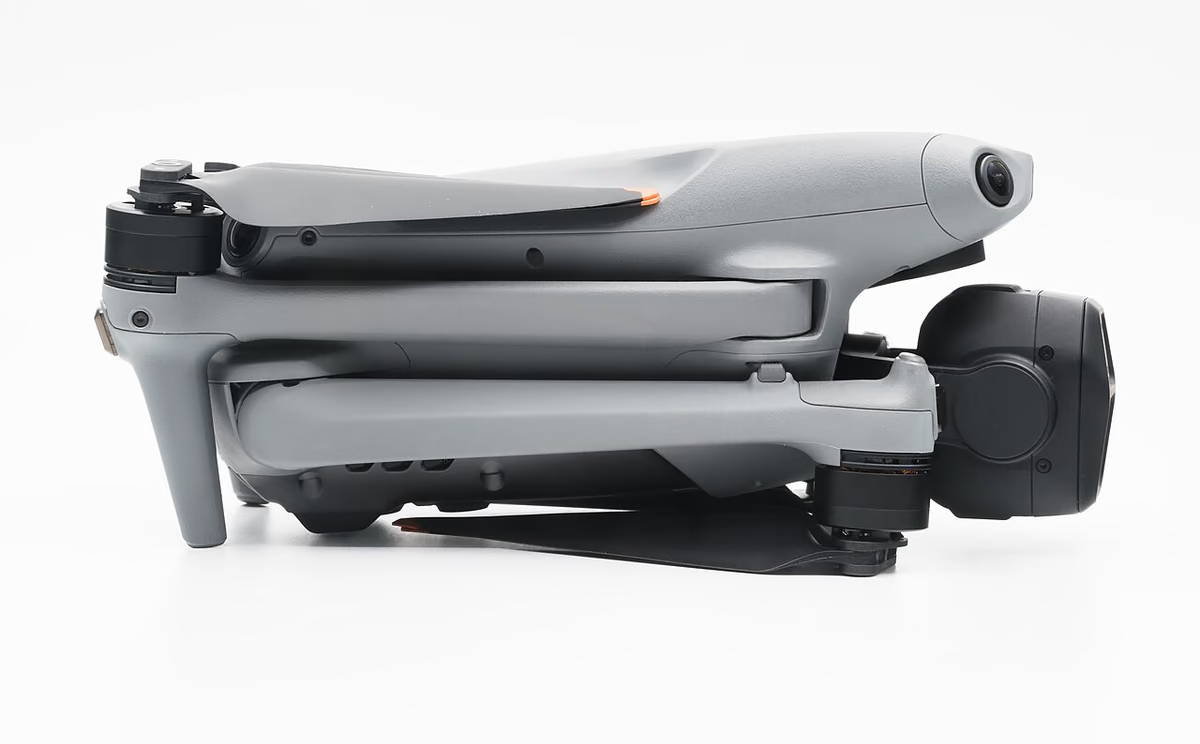
Photo: Jacek Halicki via Wikimedia Commons, CC BY-SA 4.0
Folded, it is about the size of a large water bottle laid on its side. It fits in a small camera bag with the controller and three batteries, which is what makes it a real travel drone.
The good and the bad
What works
- 1-inch main camera with great dynamic range
- 70mm tele camera is genuinely useful
- Long flight time and strong video link
- Easy and safe to fly, even at dusk
- Still available in the US
What doesn’t
- Over 250 g, so stricter rules
- Telephoto is weaker in low light
- Base kit has only one battery
- US stock can be patchy
Who it’s for
Buy it if you want one drone that does travel, landscapes and video well, and you are fine with the rules for heavier drones.
Skip it if you want the lightest legal category, or you need pro level video. Look at a Mini or a Mavic instead.
Alternatives worth a look
- DJI Mini 4 Pro, under 250 g, smaller sensor, simpler rules.
- DJI Mavic 3 Pro, three cameras and better image quality, much bigger price.
The verdict: Still the best all-round camera drone for most people in 2026. If you are in the US and want one, do not wait too long.