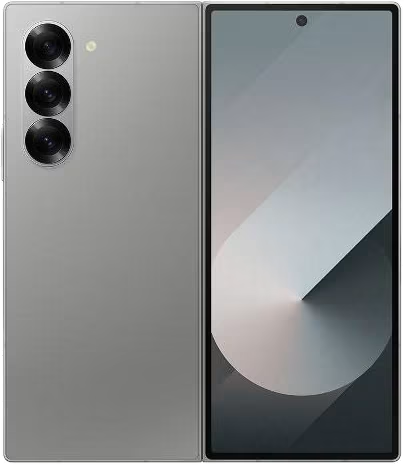
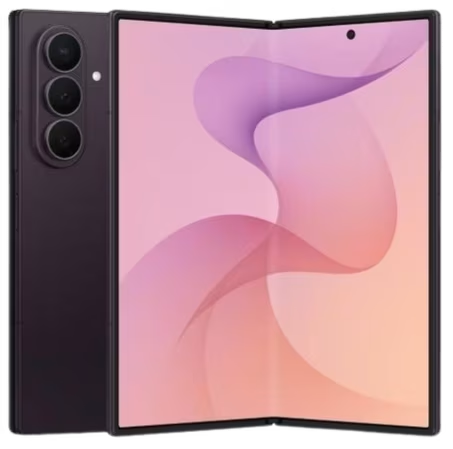
The Google Pixel 9 Pro Fold offers a lighter 215‑gram chassis, higher‑resolution main display (2076 × 2152 ppi) and a higher peak brightness of 2700 nits, while the Samsung Galaxy Z Fold8 Ultra weighs 257 g but delivers a sharper 422‑ppi main screen and a peak 3000 nits, along with a larger 6.5‑inch cover display. Software‑wise the Pixel runs Android 14 with up to seven future updates, whereas the Fold8 Ultra ships with Android 17 and One UI 9, and the latter’s Snapdragon 8 Elite Gen 5 and Adreno 840 GPU give it a performance edge over the Tensor G4/Mali‑G715. In terms of memory the Fold8 Ultra offers 1 TB storage and up to 16 GB RAM, compared to the Pixel’s max 512 GB/16 GB, and its camera system boasts a 200‑MP wide sensor versus the Pixel’s 48‑MP wide; the Fold8’s 8K video and higher‑resolution selfie camera may appeal to enthusiasts. Battery and charging differ significantly: the Pixel’s 4650 mAh pack charges at 21 W wired, while the Fold8’s 5000 mAh battery supports 45 W wired (67 % in 30 min) and faster wireless. Buyers prioritising a lighter device, a lower price (USD 1799 for the 256 GB Pixel) and a high‑quality camera for general use should lean toward the Pixel 9 Pro Fold, whereas users wanting the most advanced display, higher storage options, faster charging and a more powerful chipset will favor the Samsung Galaxy Z Fold8 Ultra.
AI summary, written from the specifications on this page.